






Board-to-board connectors in automotive electrical systems
Flight attendants of all types
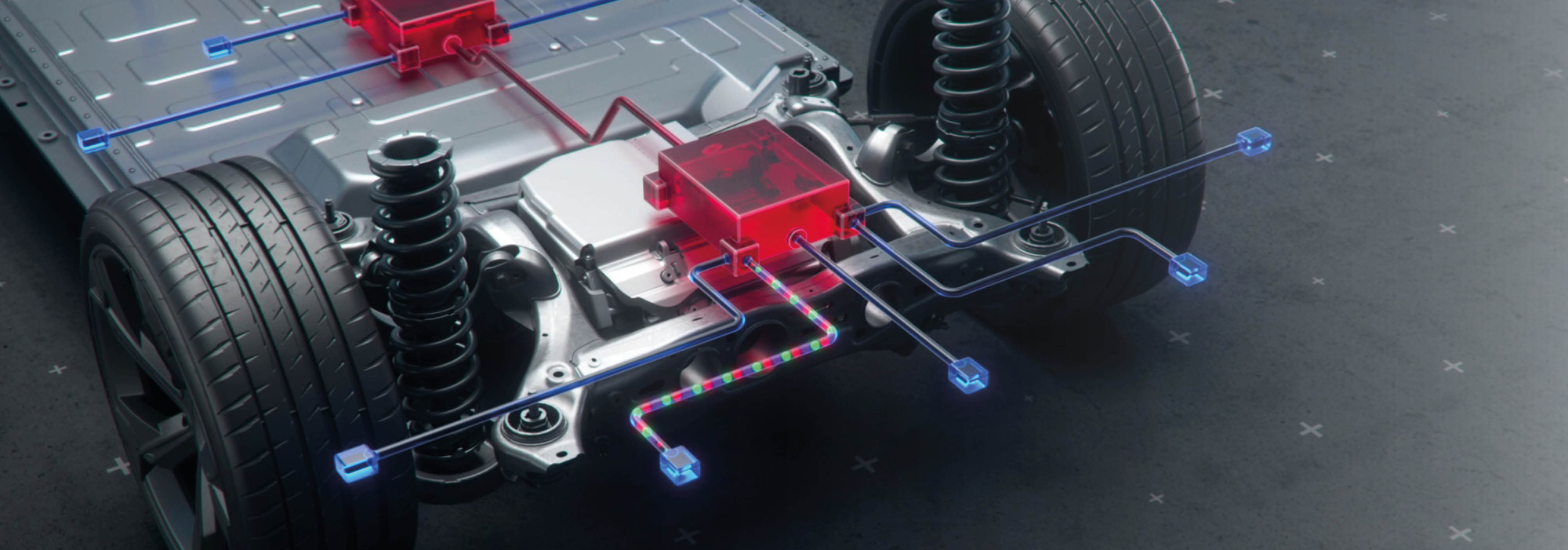
Modern automotive wiring harnesses are evolving, particularly in response to the demands of e-mobility, autonomous driving, and 4K HD infotainment. Board-to-board connectors, with their specialized features, play a key role in managing this transformation by ensuring high data transfer rates with low latency.
As is well known, a vehicle’s electrical system is a complex network of electrical connections that links all electrical and electronic components together. This includes control units, sensors, actuators, lighting systems, infotainment systems, and connectors.
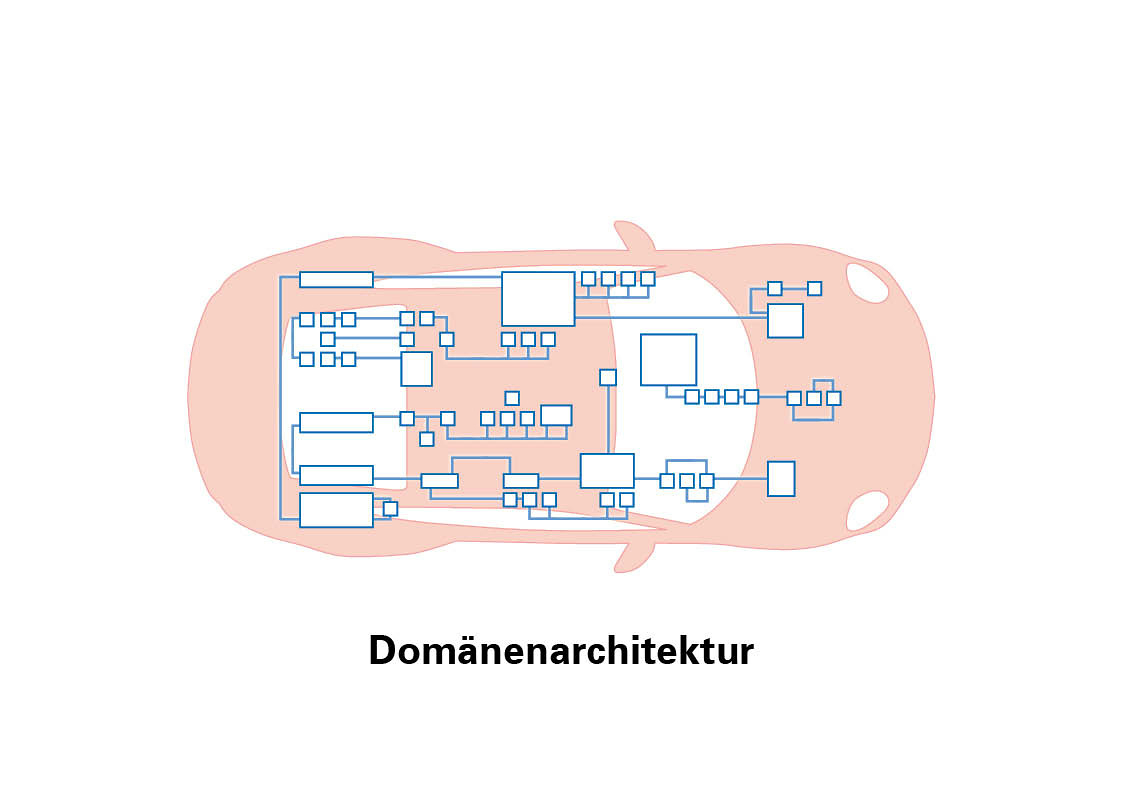
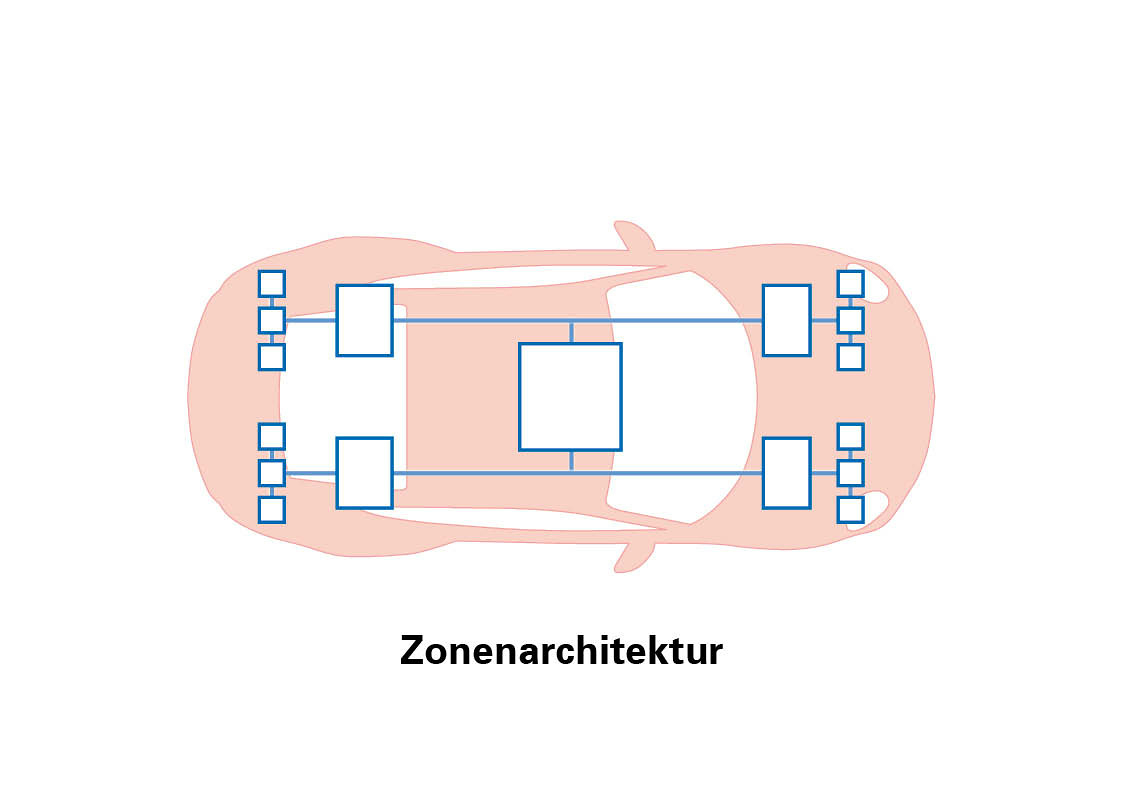
The three major trends in today’s automotive industry—automated, electric, and connected driving—require a fundamental change in the current electrical and electronic (E/E) architecture. This is because vehicle electrical system architectures are evolving from a traditional, decentralized structure consisting of up to 100 control units toward a domain-based architecture in which control units are grouped into functional areas. Each domain has a coordinating high-performance computer (HPC), thereby reducing wiring and installation effort as well as costs and weight. A new development is the zone architecture in the vehicle, in which functions are bundled into a local zone controller, thereby reducing the number of control units and the complexity of the wiring.
The three major trends in today’s automotive industry—automated, electric, and connected driving—require a fundamental change in the current electrical and electronic (E/E) architecture. This is because vehicle electrical system architectures are evolving from a traditional, decentralized structure consisting of up to 100 control units toward a domain-based architecture in which control units are grouped into functional areas. Each domain has a coordinating high-performance computer (HPC), thereby reducing wiring and installation effort as well as costs and weight. A new development is the zone architecture in the vehicle, in which functions are bundled into a local zone controller, thereby reducing the number of control units and the complexity of the wiring.

Connectors in the System Architecture of Automotive Wiring Harnesses
Such structural changes also alter the challenges faced by a board-to-board connector, which supports and implements these architectures. The task of transmitting significantly larger data streams and processing them into a comprehensive picture within an even more powerful ECU significantly alters the performance factors of the connector. Data transmission
also involves various transmission technologies that must ensure sufficient bandwidth. These include:
also involves various transmission technologies that must ensure sufficient bandwidth. These include:
- LIN (Local Interconnect Network) as a very cost-effective technology for non-safety-critical and non-time-critical applications such as door locks, lights
- , or air conditioning (Controller Area Network) as the most widely used transmission technology for controlling the engine, transmission, starter, or for battery management systems
- FlexRay with a twisted-pair cable for data transmission for time- and/or safety-critical applications such as steering or brakes
- MOST (Media Oriented System Transport) as a fiber-optic cable for multimedia and infotainment systems
- Automotive Single Pair Ethernet (SPE) as a relatively new technology that is gaining increasing acceptance due
- to its bandwidth capacity SerDes (Serializer/Deserializer) for high-speed data transmission, ideal for cameras or displays
It is in the automotive industry’s interest to use as few different transmission technologies as possible in order to keep wiring complexity to a minimum. In this context, Automotive Ethernet plays a major role, although CAN (CAN FD and CAN XL), LIN, and SerDes are also widely used. Key requirements for board-to-board connectors can be derived from this, and the LV214 standard also provides insights into their characteristics.
High speed, EMC protection, ruggedness, and miniaturization

Due to advancements in sensor technology and the E/E architecture described, the data volumes being transmitted are increasingly moving toward high-speed transmission, which depends primarily on controlling the connector’s impedance. If this impedance fluctuates, resonance occurs, which in turn results in signal transmission losses. Due to its geometry, a connector always poses a potential risk of impedance fluctuations, which are caused, among other things, by changes in material or geometry.
This is because impedance is determined by inductive and capacitive properties, which depend on the size, arrangement, and design of the pins. Changes in cross-section, in particular, have a negative effect, which is why they must be minimized as much as possible. Furthermore, dielectrics (substances with low or no electrical conductivity) near the signal path can also have negative effects, which is why selecting the right insulating material is equally important. In addition, coupling losses at the contact interface between the blade and the spring further contribute to signal degradation. Finally, impedance fluctuations can be induced by protruding conductor elements that act as antennas. Collectively, these effects are categorized as insertion loss—defined as the ratio of the outgoing to the incoming signal—also referred to as insertion attenuation. In addition, there is return loss, which describes the ratio of the reflected signal to the signal to be transmitted.With regard to the ongoing miniaturization of assemblies, EMC protection plays a particularly important role: This is because the high-frequency signals generated in this process are especially susceptible to interference from unwanted electromagnetic effects. Even the slightest interference is sufficient to cause significant distortion of data transmission, incorrect sensor measurement signals, and inappropriate control commands—a scenario that is absolutely unacceptable for safety.
A shielded connector helps, because within an assembly, a connector always acts both as an interference sink and as a source of interference. The component can also be disrupted by other components and itself exerts an electromagnetic influence on surrounding components. Shielding reduces both of these effects by a factor of approximately 100 to 200.
This is because impedance is determined by inductive and capacitive properties, which depend on the size, arrangement, and design of the pins. Changes in cross-section, in particular, have a negative effect, which is why they must be minimized as much as possible. Furthermore, dielectrics (substances with low or no electrical conductivity) near the signal path can also have negative effects, which is why selecting the right insulating material is equally important. In addition, coupling losses at the contact interface between the blade and the spring further contribute to signal degradation. Finally, impedance fluctuations can be induced by protruding conductor elements that act as antennas. Collectively, these effects are categorized as insertion loss—defined as the ratio of the outgoing to the incoming signal—also referred to as insertion attenuation. In addition, there is return loss, which describes the ratio of the reflected signal to the signal to be transmitted.With regard to the ongoing miniaturization of assemblies, EMC protection plays a particularly important role: This is because the high-frequency signals generated in this process are especially susceptible to interference from unwanted electromagnetic effects. Even the slightest interference is sufficient to cause significant distortion of data transmission, incorrect sensor measurement signals, and inappropriate control commands—a scenario that is absolutely unacceptable for safety.
A shielded connector helps, because within an assembly, a connector always acts both as an interference sink and as a source of interference. The component can also be disrupted by other components and itself exerts an electromagnetic influence on surrounding components. Shielding reduces both of these effects by a factor of approximately 100 to 200.

Speaking of robustness: Shock and vibration jeopardize the stability of data transmission, as do chemical and thermal environmental influences such as extreme temperatures, significant temperature fluctuations, corrosive gases, moisture, and dirt. The contact surface significantly determines the service life of the connector, because during operation, micro-movements occur between the two parts of the connector, which over time lead to surface abrasion and thus to increased contact resistance and, consequently, less effective signal transmission. A high-quality and durable contact coating helps to minimize this surface abrasion.
Within the contact system, a double-sided header ensures reliable performance, as a contact point is always maintained, regardless of external influences. Even higher robustness is achieved with a “gender-neutral” contact system, where the contacts interlock upon mating, ensuring maximum contact reliability.
Within the contact system, a double-sided header ensures reliable performance, as a contact point is always maintained, regardless of external influences. Even higher robustness is achieved with a “gender-neutral” contact system, where the contacts interlock upon mating, ensuring maximum contact reliability.
Single-piece connectors eliminate vulnerable contact areas, resulting in maximum resistance to external influences. The connection is made using an insertion technique, in which an insertion pin is pressed into a through-hole in the circuit board, resulting in cold welding between the copper sleeve and the insertion zone. This creates a gas-tight, pottable connection to the circuit board that offers a failure rate ten times better than that of automatically soldered connectors.

With limited installation space in automobiles, there is a shortage of room for sensors and control units, which in turn means that connectors must be made even smaller while maintaining the same or even higher performance. This makes surface-mount technology (SMT) ideal, as—unlike through-hole technology—it allows for a significantly smaller pitch and double-sided mounting on the printed circuit board.
The trend toward installing more and smaller connectors in assemblies results in longer tolerance chains, requiring connectors to compensate for increasingly larger tolerances during both assembly and operation. Connectors are already available that can absorb shocks and vibrations even more effectively.
The trend toward installing more and smaller connectors in assemblies results in longer tolerance chains, requiring connectors to compensate for increasingly larger tolerances during both assembly and operation. Connectors are already available that can absorb shocks and vibrations even more effectively.
Three complementary product families from ept
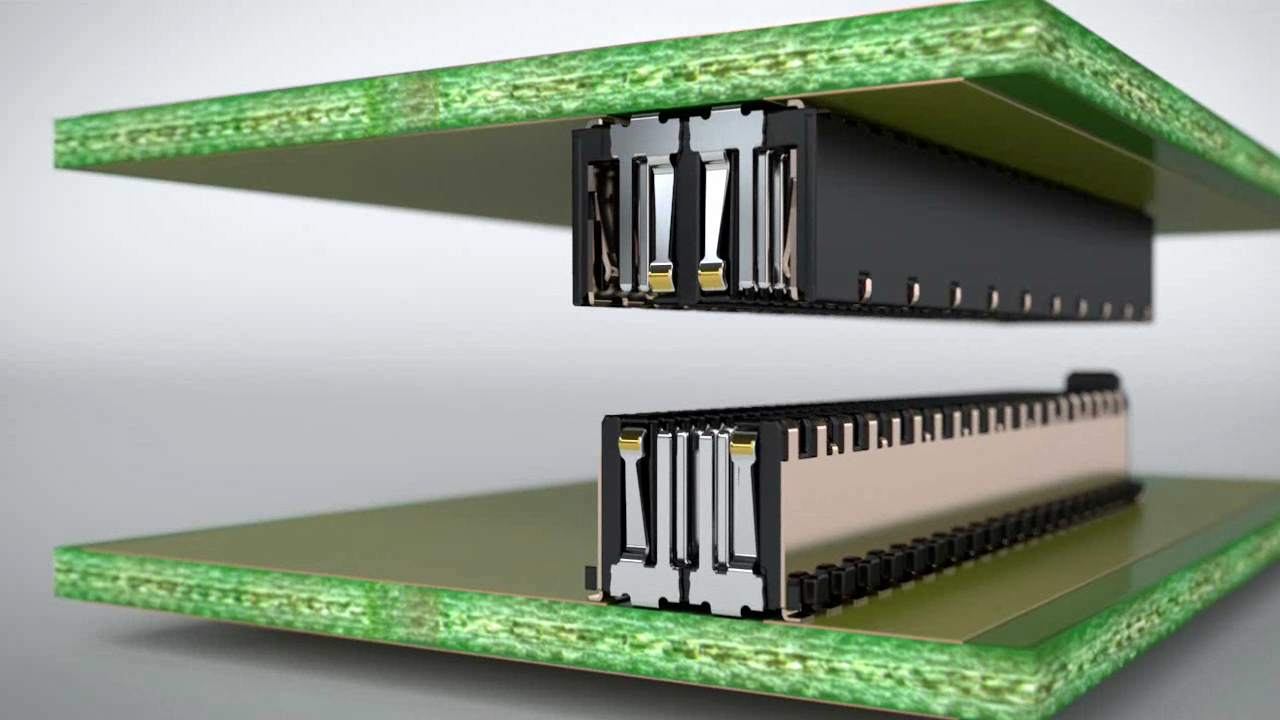
Zero8 products offer maximum scalability with customizable form factors, stack heights, and pin counts, supporting PCB spacings from 6 to 21 mm and variable pin counts from 12 to 80. The connectors are interconnectable and freely combinable, with shielding on one or both sides. The robust ScaleX connection technology ensures reliable contact under shock and vibration, compensates for tolerances, and provides EMC protection for a data transfer rate of 16 Gbit/s.
Details on Zero8
Details on Zero8
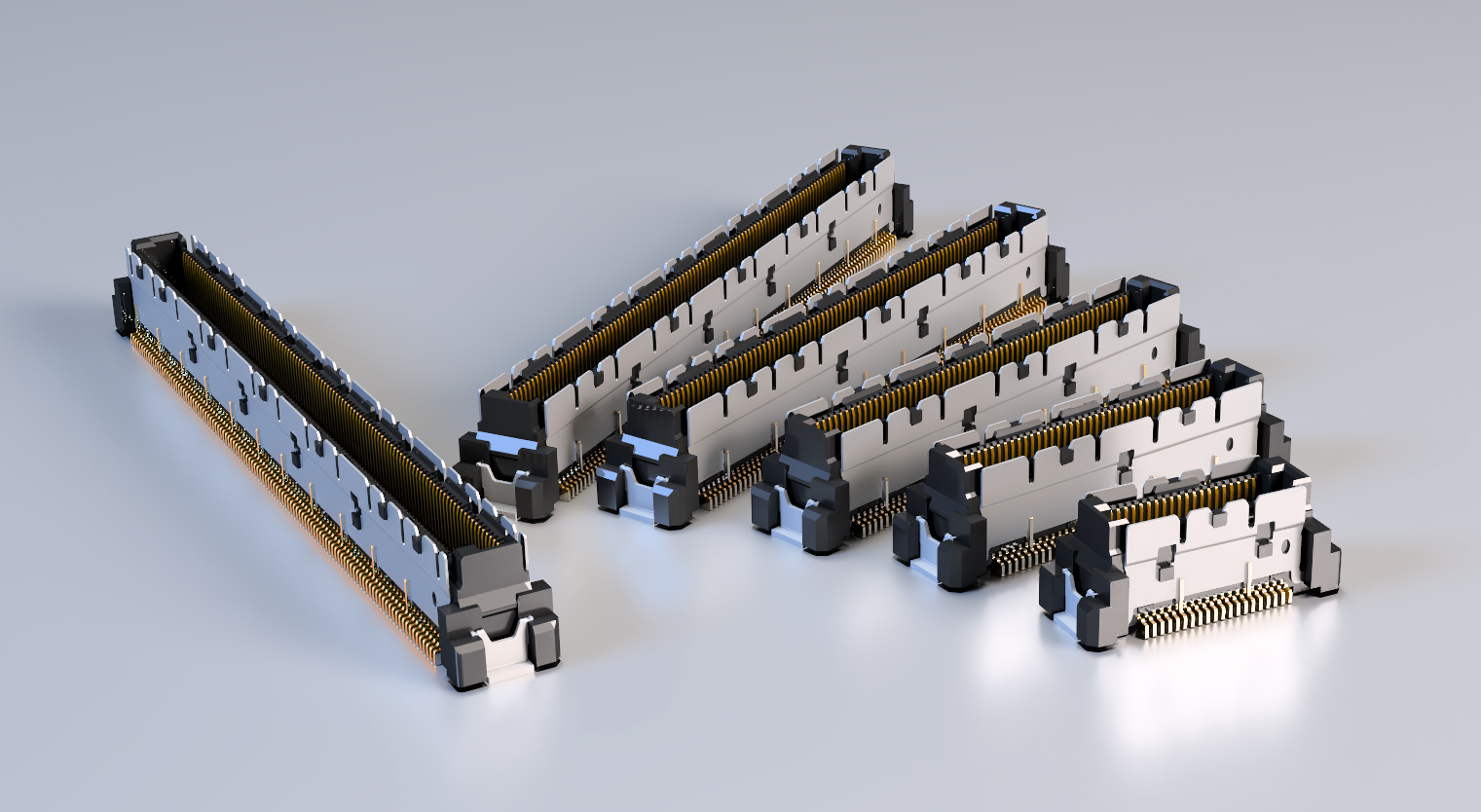
Colibri® products are shielded, dual-row SMT connectors with a 0.5 mm pitch that are compatible with PICMG COM Express®, SFF-SIG CoreExpress®, and nano-ETXexpress. The receptacles for COM modules feature 196 signal pins and 24 ground pins, while the plugs for carrier boards are optionally available with guide posts, a shield, and SMT mounting. The Colibri COM Express system offers excellent signal integrity for speeds exceeding 25 Gbit/s, making it ideal for high-speed applications with limited installation space.
Details about Colibri
Details about Colibri
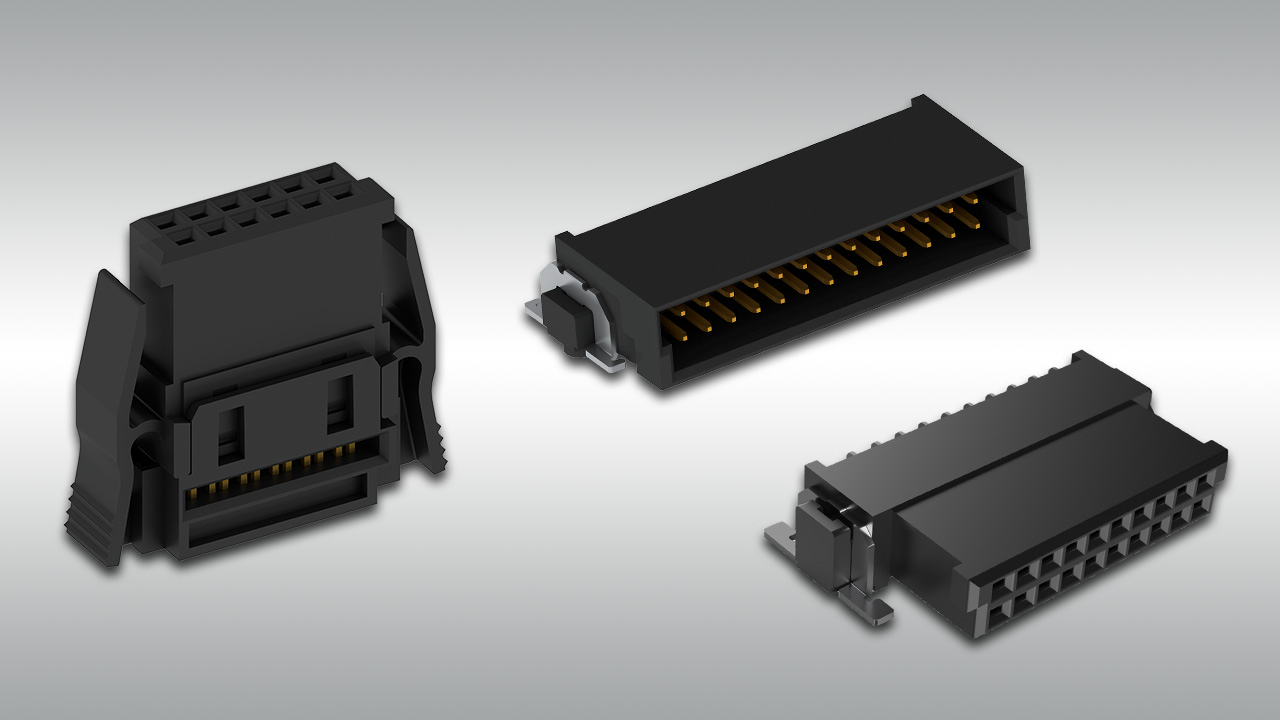
As its third product family, One27 offers rugged and compact SMT PCB connectors with a 1.27 mm pitch. They support PCB spacings from 8 to 20 mm and are available with 12 to 80 contacts, as well as in pre-assembled cable configurations. Both parallel and right-angle board-to-board connections are possible; the series is particularly robust and easy to process, ensuring reliable contact and high flexibility in PCB layout.
Details on One27
Details on One27

Looking ahead, autonomous driving will be closely linked to the further development of data transfer and communication technologies. Key aspects such as 5G connectivity, cybersecurity, V2X communication, as well as edge computing and blockchain technology will significantly shape data transmission, but one thing remains certain: the coexistence of vehicle electrical systems and connectors will eventually make a car without a steering wheel a reality.
Are you looking for a specific connector?
product list

For further information,
please contact us.
Submit an inquiry via the form
: +49 8861 2501 0
sales@ept.de
please contact us.
Submit an inquiry via the form
: +49 8861 2501 0
sales@ept.de