






Contents
The right board-to-board connection for every applicationBoard-to-Board Connectors: A ComparisonThe right board-to-board connector for your applicationConnecting Printed Circuit Boards - Tips for Your DesignFrom single-board computers to industrial PCs: No problem
with the right board-to-board connector
with the right board-to-board connector
Board-to-board connectors: From rugged to high-speed
Contents
The right board-to-board connection for every applicationBoard-to-Board Connectors: A ComparisonThe right board-to-board connector for your applicationConnecting Printed Circuit Boards - Tips for Your DesignFrom single-board computers to industrial PCs: No problem
with the right board-to-board connector
with the right board-to-board connector
The right board-to-board connection for every application

Is your single-board solution no longer sufficient? With our board-to-board connectors, you gain the freedom to expand your single-board solutions. We offer the right board-to-board connection for your specific application. The wide range of applications extends from rugged PCB connectors for hammer drills to high-speed board-to-board mezzanine connectors for high-tech computers. Our PCB-to-PCB connectors support data transfer rates ranging from 3 Gbit/s to 16+ Gbit/s, and pin counts from 12 to 440. Where space is limited for a direct board-to-board interface, the rugged One27 PCB connector also provides a wire-to-board option.
Go to the Product Finder »
Go to the Product Finder »
Board-to-Board Connectors: A Comparison
| one27 | Zero.8 | Colibri | |
|---|---|---|---|
Datenübertragungsraten | 3Gbit/s | 16Gbit/s | 10 und 16 Gbit/s |
Rastermaß | |||
1,27 mm | 0,8 mm | 0,5 mm | |
Schirmung | |||
ohne Schirmung | ja | ja | nein |
mit Schirmung | nein | ja | ja |
Polzahlen / Anzahl der Signale | |||
Polzahlen | 12 | 12 | 40 |
16 | 20 | 80 | |
20 | 32 | 120 | |
26 | 52 | 160 | |
32 | 80 | 220 | |
40 | 440 | ||
50 | |||
68 | |||
80 | |||
Reihenanzahl | |||
2 | 2 | 2 und 2x2 | |
Boardabstände | |||
Boardabstand min | 8 mm | 6 mm | 5 mm |
Boardabstand max | 13,8 mm | 21 mm | 8 mm |
Verbindungsmöglichkeit zweiter und mehrerer Leiterplatten | |||
gerade - parrallele BtB Verbindung | ja | ja | ja |
gewinkelt - 90° BtB Verbindung | ja | ja | nein |
Cable to Board | ja | nein | nein |
The right board-to-board connector for your application
The key distinguishing features of SMT PCB connectors are data transfer rates and pitch. The smaller the pitch and the higher the required connection speed, the greater and more complex the design effort required for the board. In general, a board-to-board connector or wire-to-board connector represents an interference point within the transmission path. Here, you should pay particular attention to impedance, insertion loss, and crosstalk. The higher the quality of a PCB connector, the lower the data transmission interference.
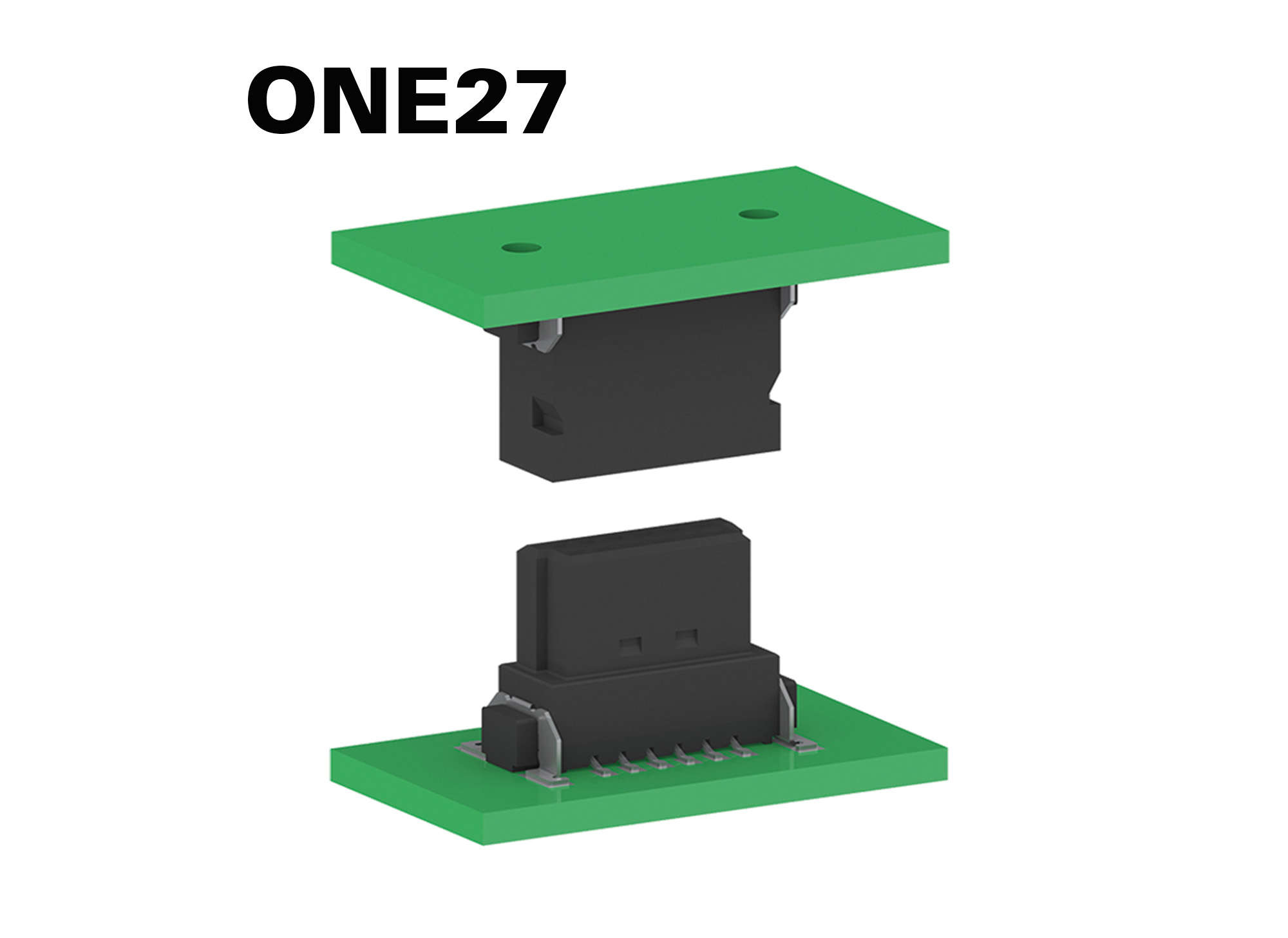
ROBUST
Our robust and long-proven One27 connector achieves data transfer rates of 3 Gbit/s. With a pitch of 1.27 mm, it is available with 12 to 80 contacts. PCB spacing ranging from 8 to 13.8 mm can be achieved. The One27 enables board-to-board connections in parallel, at right angles, horizontally, and in wire-to-board orientations.
Learn more about the One27 »
Our robust and long-proven One27 connector achieves data transfer rates of 3 Gbit/s. With a pitch of 1.27 mm, it is available with 12 to 80 contacts. PCB spacing ranging from 8 to 13.8 mm can be achieved. The One27 enables board-to-board connections in parallel, at right angles, horizontally, and in wire-to-board orientations.
Learn more about the One27 »
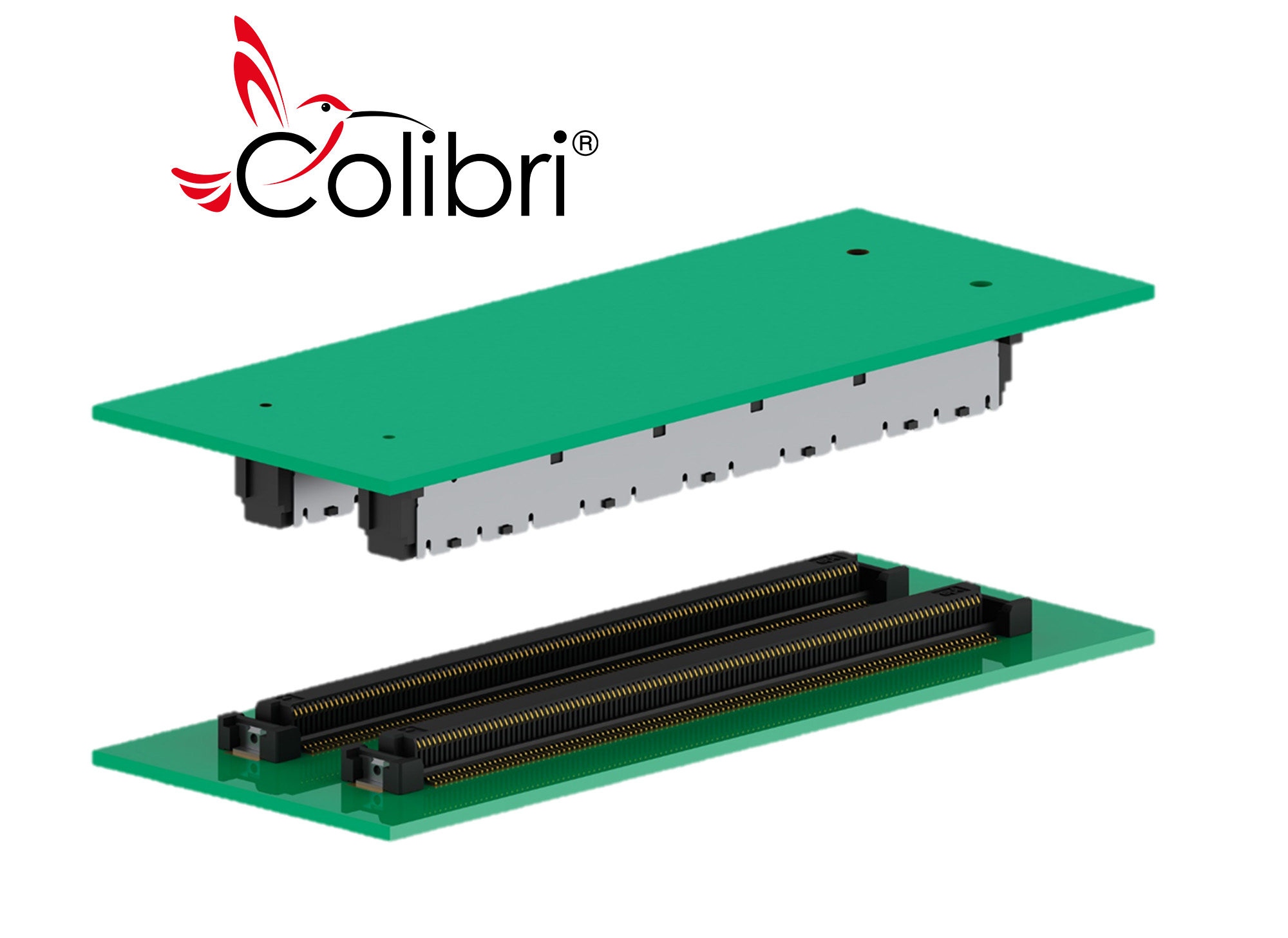
HIGH SPEED, PARALLEL
Our ept Colibri PCB connector offers data transfer rates of either 10 Gbit/s or 16 Gbit/s. [SG1] The 0.5 mm pitch variants of this board-to-board connector feature 40 to 220 contacts. Board spacing ranging from 5 mm to 8 mm is possible. The Colibri offers excellent data transmission characteristics, and boards can be stacked in parallel [SG2]. The ept Colibri PCB-to-PCB connector was developed for COM Express applications with 220 and 440 contacts. However, the range of applications for this board-to-board connector has since multiplied.
More information about the Colibri »
Our ept Colibri PCB connector offers data transfer rates of either 10 Gbit/s or 16 Gbit/s. [SG1] The 0.5 mm pitch variants of this board-to-board connector feature 40 to 220 contacts. Board spacing ranging from 5 mm to 8 mm is possible. The Colibri offers excellent data transmission characteristics, and boards can be stacked in parallel [SG2]. The ept Colibri PCB-to-PCB connector was developed for COM Express applications with 220 and 440 contacts. However, the range of applications for this board-to-board connector has since multiplied.
More information about the Colibri »
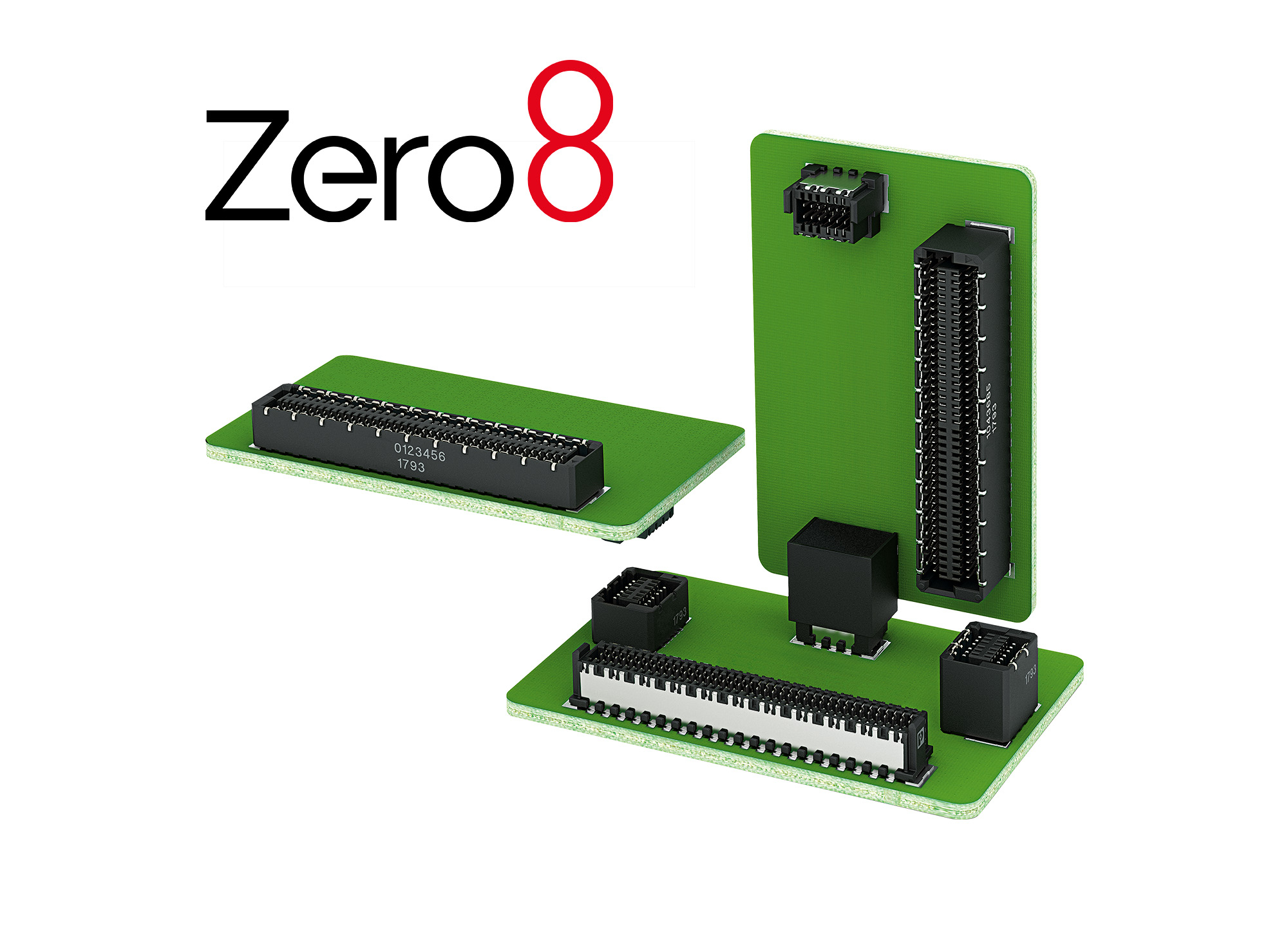
HIGH SPEED, ROBUST, PARALLEL OR RIGHT-ANGLE
Our ept Zero.8 board-to-board connector offers data transfer rates of up to 16+ Gbit/s. With a pitch of 0.8 mm and ScaleX technology, the number of contacts ranges from 12 to 80 poles. The PCB-to-PCB connector is available in shielded and unshielded versions. Board-to-board distances ranging from 6 to 21 mm are possible. Compared to the ept Colibri PCB connector, the board-to-board connector can be used as a parallel PCB connector or as a right-angle PCB direct connector. This board-to-board connector significantly increases the cost-effectiveness of your design. Thanks to the wide variety of options, the PCB-to-PCB connector can be expanded in all directions.
More information about the Zero8 »
Our ept Zero.8 board-to-board connector offers data transfer rates of up to 16+ Gbit/s. With a pitch of 0.8 mm and ScaleX technology, the number of contacts ranges from 12 to 80 poles. The PCB-to-PCB connector is available in shielded and unshielded versions. Board-to-board distances ranging from 6 to 21 mm are possible. Compared to the ept Colibri PCB connector, the board-to-board connector can be used as a parallel PCB connector or as a right-angle PCB direct connector. This board-to-board connector significantly increases the cost-effectiveness of your design. Thanks to the wide variety of options, the PCB-to-PCB connector can be expanded in all directions.
More information about the Zero8 »
Connecting Printed Circuit Boards - Tips for Your Design
Even relatively early in the development phase, developers need to consider the appropriate direct PCB connection. We have compiled a list of the most important questions you should clarify in advance:
- Is a single-board solution sufficient?
- How many signals are required by the board-to-board connector?
- How much space can the board-to-board connector occupy on the PCB?
- What data transfer rate must the PCB-to-PCB connector achieve?
- What are the requirements for impedance, insertion loss, and crosstalk?
- What is the maximum assembly size?
- How should the boards be connected to each other?
- Is a parallel-stacked PCB connector required?
- Must the board-to-board connector be mounted at a right angle?
- Or is the only option to establish the PCB connection via a wire-to-board connection?
- Which components dictate the minimum spacing between the boards?
- What are the expectations regarding electromagnetic compatibility?
- How important is shock and vibration resistance, particularly for mobile devices?
- How important is heat dissipation? Can a different component layout, using the appropriate board-to-board connector, improve heat dissipation and thermal management?
- What are the environmental conditions under which the end device operates?
- Do EMI/RFI considerations require a separation between functions and RF shielding of part of the circuit?
- Is it likely that an external I/O will need to be replaced on-site?
From single-board computers to industrial PCs: No problem
with the right board-to-board connector
As industrialization and automation advance, the demands placed on systems are constantly increasing. Popular single-board solutions often reach their limits and need to be expanded. Board-to-board connectors offer a simple and reliable solution.
A board-to-board connector provides maximum flexibility when connecting and disconnecting printed circuit boards. Its primary function is to transmit signals and currents. Typically, a pair of board-to-board connectors consists of a male connector and a female connector. The high quality of our ept connectors stems, among other things, from the ideal alignment of the two connector halves with one another. Our in-depth expertise in contact geometry, contact material, and contact plating—as well as the geometry and material of the insulator for optimal air gaps and creepage distances—makes ept connectors your reliable partner. Automated processability, thanks to excellent coplanarity, is a given.
As mentioned earlier, PCBs can be easily connected to one another with maximum reliability through the use of connector pairs. This opens up the possibility of expanding the motherboard with daughter cards. Through clever design, any number of PCBs can be connected to one another. The limiting factor is the outer housing. PCBs can be stacked in parallel or connected to one another at a 90° angle. Wire-to-board solutions are also possible. As packing density and data transfer rates continue to rise, mezzanine cards offer an ideal way to expand existing applications cost-effectively and flexibly. By using board-to-board connectors, the modules can be easily swapped out. The cost-effectiveness of the computers is enhanced by maximum design flexibility. This allows a baseboard to be equipped with daughter cards performing various functions.
A board-to-board connector provides maximum flexibility when connecting and disconnecting printed circuit boards. Its primary function is to transmit signals and currents. Typically, a pair of board-to-board connectors consists of a male connector and a female connector. The high quality of our ept connectors stems, among other things, from the ideal alignment of the two connector halves with one another. Our in-depth expertise in contact geometry, contact material, and contact plating—as well as the geometry and material of the insulator for optimal air gaps and creepage distances—makes ept connectors your reliable partner. Automated processability, thanks to excellent coplanarity, is a given.
As mentioned earlier, PCBs can be easily connected to one another with maximum reliability through the use of connector pairs. This opens up the possibility of expanding the motherboard with daughter cards. Through clever design, any number of PCBs can be connected to one another. The limiting factor is the outer housing. PCBs can be stacked in parallel or connected to one another at a 90° angle. Wire-to-board solutions are also possible. As packing density and data transfer rates continue to rise, mezzanine cards offer an ideal way to expand existing applications cost-effectively and flexibly. By using board-to-board connectors, the modules can be easily swapped out. The cost-effectiveness of the computers is enhanced by maximum design flexibility. This allows a baseboard to be equipped with daughter cards performing various functions.

For further information,
please contact us.
Submit an inquiry via the form
: +49 8861 2501 0
sales@ept.de
please contact us.
Submit an inquiry via the form
: +49 8861 2501 0
sales@ept.de